

Created for teacher, by sports specialists
Our Platform saves teachers time, provides clear structure and progression, and supports inclusive delivery for all abilities. With expert knowledge built in, lessons are easy to run, highly active, and aligned to curriculum expectations.
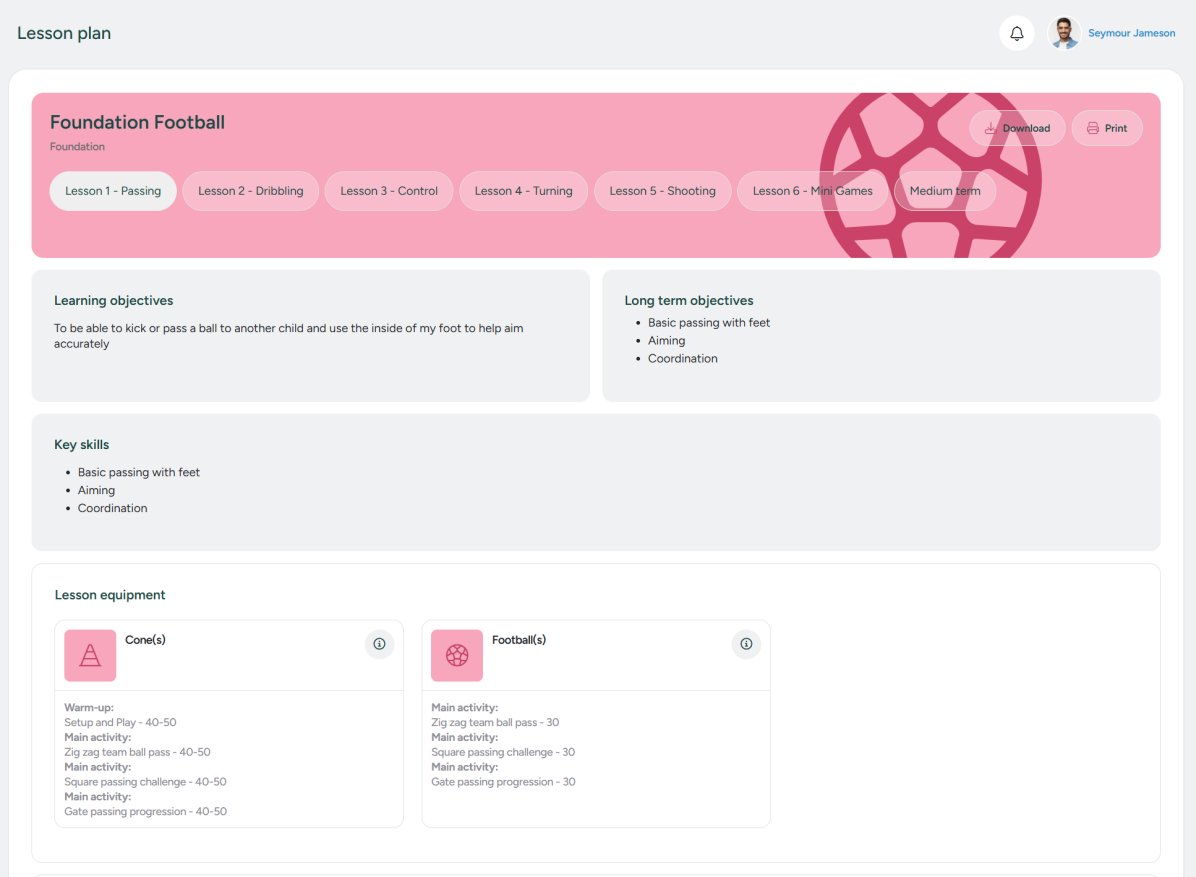
Building confidence with detailed lesson plans
As PE specialist we are better suited to creating PE plans due to our in-depth subject knowledge of physical development, movement skills and progression across age groups, which allows us to design lessons that are safe, purposeful and developmentally appropriate. We understand how skills build over time and can break movements down into clear, achievable steps, ensuring all pupils experience success while still being challenged.
As a specialist we are also trained to manage space, equipment and grouping effectively, which is essential for keeping large classes active, minimising waiting time and maintaining high levels of engagement. In addition, we have a strong understanding of health and safety, warm-ups, cool-downs and injury prevention, enabling us to plan lessons that protect pupils while maximising learning. These expertise means our PE lessons are not just active but are structured to develop physical literacy, confidence and enjoyment, rather than simply filling time with games.
Flexible and inclusive assessments
Our system allows you to assess children’s progress seamlessly and effortlessly, completely customisable to meet your school’s needs. Flexible and inclusive assessment in PE is vital because it ensures all children have the opportunity to be able to show their learning and progress, whatever their starting point. By assessing through movement, observation and teamwork, schools can capture real learning in a way that is fair, engaging and accessible, while promoting confidence, enjoyment and positive attitudes towards physical activity.
From an Ofsted perspective, this approach clearly demonstrates an ambitious and inclusive PE curriculum where assessment supports learning and progression for every child. It shows that teaching is responsive, pupils are making meaningful progress, and PE contributes positively to wellbeing and whole-school development, all of which strengthens a school’s evidence during inspection.

Engaging teaching resources
Our interactive teaching resources provide a wide range of materials for Foundation, KS1, and KS2, designed to support creative and engaging learning. They include activity cards, differentiation cards, insightful videos, diagrams, and pictures, helping teachers bring lessons to life and making concepts easier for children to understand and explore through hands-on activities.
With such a broad selection of resources, schools can adapt learning to suit different abilities and interests, encouraging curiosity and participation across every year group. These tools make teaching more effective while keeping lessons fun, dynamic, and inspiring for both pupils and teachers.

Streamline your curriculum planning
A clear, flexible overview across all classes, easily monitoring student progress with fully customisable tracking criteria. A customised curriculum map that uses a simple drag-and-drop method makes planning intuitive and flexible, allowing you to easily organise lessons across a whole school with minimal effort. This clarity ensures a balanced and progressive learning experience, while the ability to track student progress against fully customisable criteria helps identify strengths and areas for improvement, tailor support, and demonstrate achievement clearly to students, parents, and school leaders.

Track pupils progress across weeks, topics, terms and years
Our system allows schools to track children’s progress either week by week or topic by topic, providing the flexibility to adapt to each school’s approach and meet the diverse needs of pupils.
Tracking pupils’ progress across weeks, topics, terms, and years is important because it helps teachers understand how well each child is learning over time, identify strengths and areas that need support, and make informed decisions about teaching strategies. By monitoring progress week by week, teachers can adjust lessons quickly if a child is struggling or extend learning if they are excelling. Looking across topics ensures that pupils are building skills and knowledge consistently rather than just learning in isolation. Tracking over terms and years gives a bigger picture of long-term development, helping schools spot trends, set realistic targets, and plan interventions to ensure every child reaches their potential. It also provides evidence for parents, school leaders, and inspections that learning is effective and gaps are being addressed. Overall, it supports more personalised teaching and helps pupils achieve better outcomes.
